First Thing - Choose a Date
Once you have decided to create a storytelling piece about your injury and early recovery, set a date for the first performance. Don’t wait to get “details figured out” or “see how things go” – decide that you want to use storytelling as part of your recovery and set a date.
Setting a deadline and performance date is an act of empowerment – YOU are making the decision when this step will occur. This is important because so much of recovery is out of the survivor’s control and no amount of pushing personal decisions will decide when functions of the body and brain will take a step forward in functioning, and more often then not, medical professionals will decide the best course of action and tempo of your rehabilitation. With so much out of a survivor’s control it is easy to become lost in the mayhem and feel you have no personal agency. By setting a performance date, you are deciding when this step of sharing your story will happen
That said, there are no requirements for how much time you give yourself – three months or three years doesn’t matter – but imposing a completion date does create a plan. If a date is not set, it is easy for the storyteller to fall into a trap of always having “more to do” or “finding new ideas”, and this hinders completion. I do recommend consulting with a rehabilitation therapist to decide an appropriate length of time set for this work – it can be useful to have help to factoring in other commitments such as a survivor’s rehabilitation schedule or events around returning to the community, but ultimately it is important that the survivor makes the decision about what when the first performance will be.
Along with this, I recommend creating a reasonable timeline for when you anticipate steps will be completed – for example, set a date for completing research; when the performance script/outline is completed; form rehearsal time on the stage…and so on (each step I just mentioned will be returned to with future entries). Note that, once the survivor has decided on performance date this should be “set in stone,” but I do believe that dates for each creative stage can have some more fluidity and might be adjusted as circumstance requires. But by setting a timeline, the storyteller can keep track of progress as it occurs and recognize what how much work is required to complete the project.
Be clear that having this first storytelling does not mean having a “final draft” – a storytelling performance must be open to growth and change and a first performance should never be seen as where the story ends. A deadline can be a source of motivation – and it shouldn’t be held as a source of stress. Some find that a deadline produces dread, but I emphasize that every time you tell your story, you are sharing a draft. I will talk more about reasons for this in a later post, but know that my initial performance of Who Am I, Again? (the piece that began this work) was nothing like my current draft. Even now, having performed the piece more than a hundred times, I continue to return to phrases and moments and make adjustments that help to keep the performance alive.
Storytelling is an art that explains the process in its name – storyTELLING. To know if a story works, it must be TOLD. Furthermore, for a story to affect an audience it should be alive – and to be alive means being open to change. While I do recommend taking time to rehearse and prepare your initial performance (more on this in the future), I also encourage you to recognize that a performance is never the conclusion of the story.
To explain with a personal example – last week there was a storyslam near my home in downtown Beijing. If you don’t know, a storyslam is a storytelling open-mic when anyone who signs up can share a personal story related to the theme of the night. This storyslam is a monthly event for the English-speaking community in Beijing, and I show up regularly to try out new material – but this month I intended to sit out and just watch because I didn’t have any material ready to share.
Unfortunately, on this particular night, it seemed that most English-speaking people in Beijing were not in the mood to share and very few people signed up. Thus, with five hours before the event began, organizers (who are friends) contacted me asked if I could share something. With the clock ticking, I reached into my memories, shuffled thoughts about for for a bit, and pulled out an unrehearsed story.
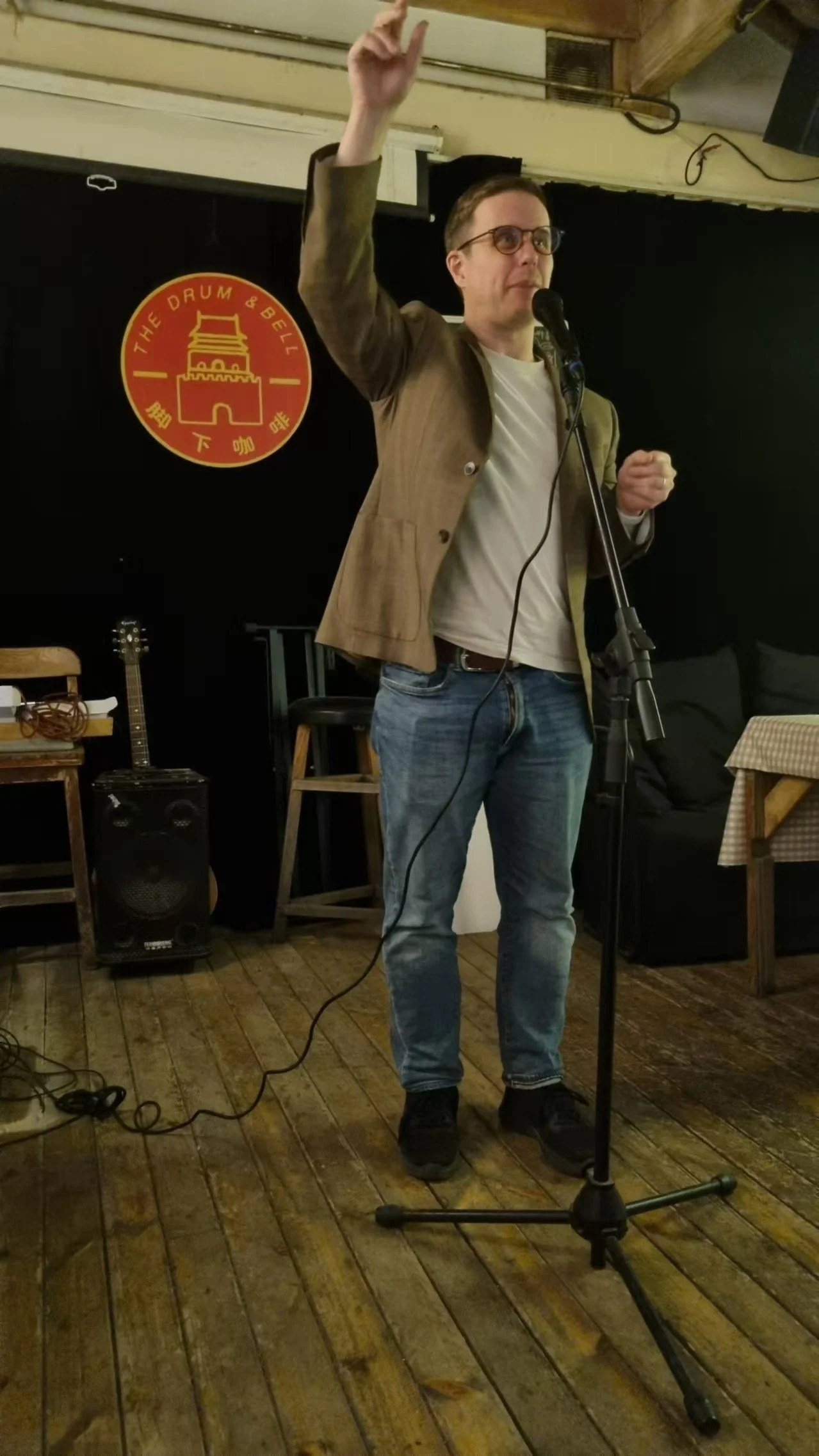
It was not a polished piece and I stumbled a lot and it is not a performance I’m proud of. I did, however, record the piece and I will return to the material so that the next time I share, the story will be better rehearsed and able to shine. Besides, finding the gumption to prepare and present a performance in half a day does fill me with a bit of pride. The deadline was presented and I accepted the challenge to put a piece together.
Think about setting a personal deadline for your story about recovery in a similar manner. Once the date and time are set, you need to have something ready to share – but you must know you will revise this story later. I do not mean to suggest you should prepare a story in one day, or even one month, but choose a reasonable length of time for the project. I encourage finding assistance in choosing a date, but remember that the decision must be yours. Returning to the initial idea of this entry, the goal is to share your story, and YOU are choosing to share YOUR story as part of YOUR recovery and YOU are deciding when this will happen. Setting a deadline is you claiming agency.