The Hypothesis
My claim is that using storytelling is a beneficial tool in the acceptance and appreciation of self-identity after a brain injury trauma. This is my logic behind why it works.
Let’s begin by acknowledging that we all change in life – preferences, habits, personality traits – the person you are at age five is significantly different from the person you are at age twelve who is different form your person at age twenty and so on. That said, with most changes there is a gradual progression and we can account for the slow change – “When I was eight I could watch TV for five hours straight but now I have trouble sitting still for more than an hour.” Or there may be a specific event a person can point to that clarifies of when a change occurred – “I used to love pizza, until my 12th birthday party when I ate so much that I got sick and I haven’t been able to eat a slice since.” Regardless, there is a story – general or specific – that explains why a change occurred and recognizes a constant self regardless of changes – this is sometimes referred to as the narrative self.
However, when traumatic brain injury occurs there are changes in abilities, habits, preferences, social patterns and personality that occur in an instant, but in most cases the survivor does not have a clear story that explains why or how these changes occurred. The statement, “I had a brain injury,” exists as a blanket explanation, but as for what this actually means often escapes the survivor. Not only is the biological processes damningly confusing, but more likely than not the incident that caused the injury does not reside in the survivor’s memory – or even if it does the details will be muddled.
There is no story – no personal narrative – that accounts for the changes.
What’s more, the survivor’s social circle – friends, family, co-workers – also has no story. Sure, everyone knows there was an injury, but it is generally expected that the survivor’s previous personality will continue, especially once the survivor is released from the hospital and/or rehabilitation center – the misunderstanding is that leaving the hospital means “you’re all better now, just like before.” Therefore, when the survivor behaves in unexpected ways it causes confusion. Again, the blanket of “brain injury” exists, but instead of resolving confusion the trauma becomes a mark in time – “Yeah, I mean, I don’t know, he’s been acting just a little weird ever since the coma.” Again, a clear narrative is missing.
This discontinuity of pre and post trauma personality causes distress and can quickly create fractures in relationships as well foster self-loathing and spite in the survivor – these changes don’t make sense. Whats more, often a survivor will not be able to internally recognize that there even was a change – other people might point out a difference, but understand that the survivor is merely trying to act “normal”. The predicament becomes, “I was acting normal before my injury, and I’m trying to act the same normal now, but people say I’m different. I don’t understand.”
This is where the creative process of storytelling becomes a tool. By taking the time to research and construct a story of what happened, a survivor creates a personal narration that tells what happened. There can be a clear progression of what occurred as well as a person documentation of what it mean to come to terms with differences. This narrative can also express challenges, social stigma, and other moments of joy or sorrow that may color a survivor’s current personality.
Telling your story allows you to self-claim your identity and proclaim to the world who you are and how you got here. You can point to the narrative – “This is who I was, and now this is who I am.”
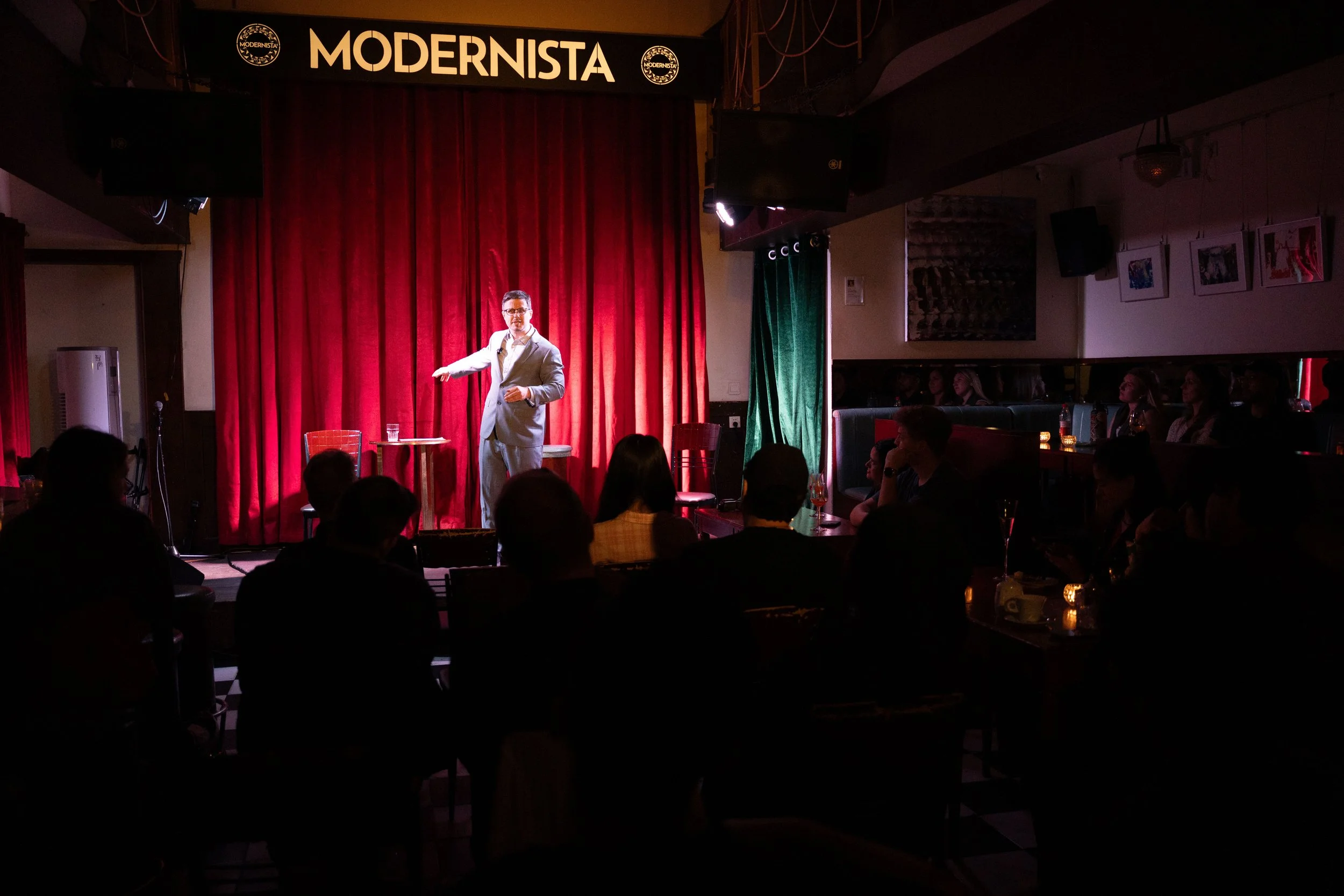
From this point in the blog until I’m finished, there will be steps and thoughts of a suggested process of how to form this story. For this I will discuss my process for creating my storytelling piece Who Am I, Again?, but I also aim to recognize how these steps can be modified and look to include steps I may have missed in my initial goal. I want to provide a storytelling tool box that a survivor can select from to share a personal story of recovery.
So I’m eager to hear your questions or concerns about this process – as of yet there is no technique for this sort of rehabilitation and we’re building this together. I look forward to your fresh ideas.
Thank you for reading. Keep in touch.